The first time I saw Marina Abramovic was on social media. It was a video clip of one of her exhibits.
She was sitting on what seemed like a typical dining chair, but there was no dining table—instead, in front of her sat a brunette female, staring directly at her. They were just a few feet apart, close enough to see each other clearly, to feel the intensity of their shared gaze.
I was drawn in. What was happening here?
So I kept watching, just like the people surrounding them in the video. The whole scene felt like some kind of ritual, and it wasn’t until later that I learned this was indeed an artistic performance—one of Marina Abramovic’s many signature works.
Abramovic, often described as the “grandmother of performance art,” challenges the boundaries between audience and artist. In doing so, she explores vulnerability, connection, endurance, and the uncomfortable truths we often overlook.
Marina Abramovic is a pioneering performance artist whose works delve into the extremes of human emotion, endurance, and connection. Among her most famous works is “The Artist Is Present,” in which she sat silently across from museum visitors at the Museum of Modern Art in New York for hours on end.
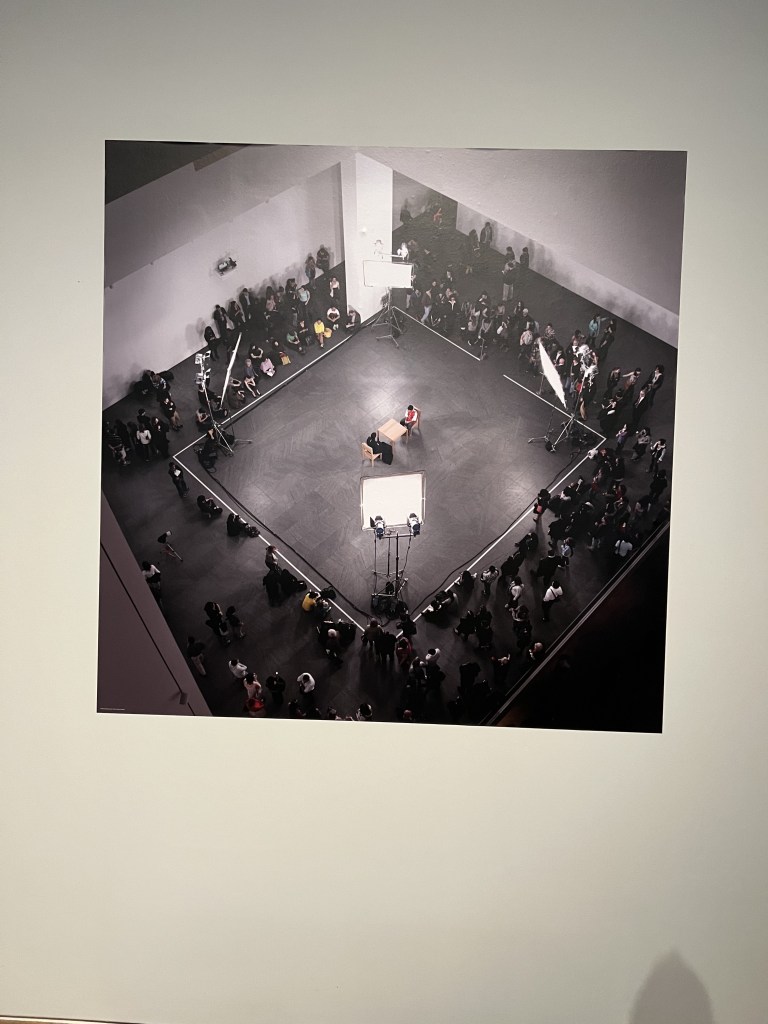
The simple act of staring into someone else’s eyes became a profound and often emotional experience for participants. Abramovic’s works are confrontational, raw, and often unsettling—but they are always intended to make us feel something, to question something about ourselves or the world around us.
I’m not exactly sure when my algorithm decided I’d like to see more of Marina, but she kept appearing over the years.
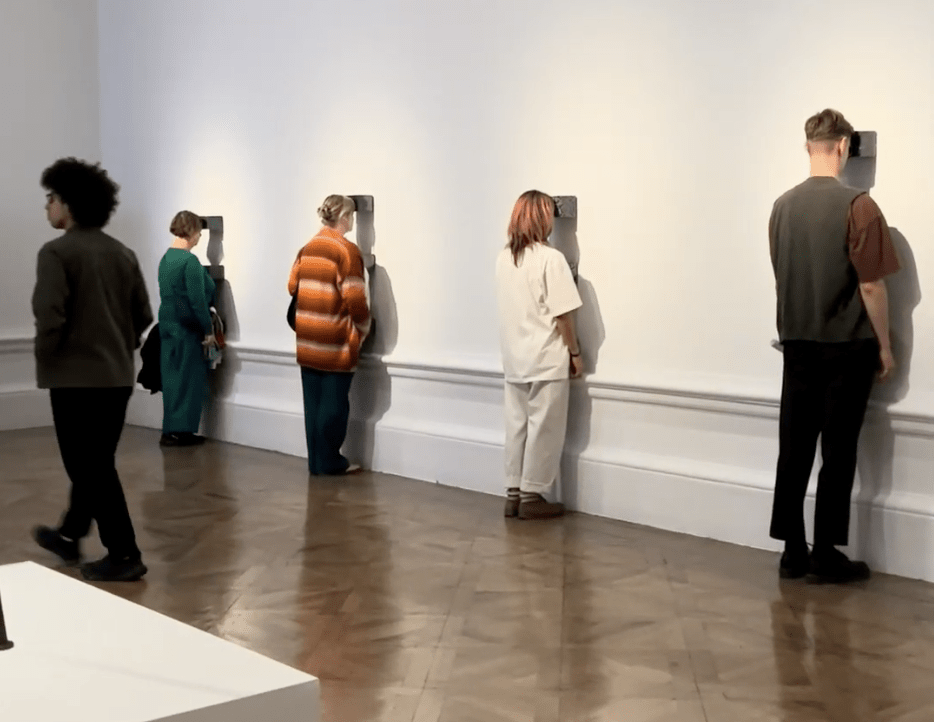
So when I was planning a trip to London and looking for non-touristy things to do, I saw that she had a temporary exhibition at the Royal Academy of Arts. I booked a ticket immediately. This was my chance to experience her work firsthand—not through a screen, but right there, up close.
The people during the live performances were completely naked, so photographs of the live exhibits weren’t allowed. But I’d still like to share my experience with you.
Marina Abramovic’s Performance Art
Imponderabilia
“Imponderabilia” is one of Abramovic’s iconic early works. In the original 1977 performance, Marina and her partner Ulay stood naked in a narrow doorway, forcing people to squeeze between them to enter the gallery.
The participants had to choose whom to face as they moved through—a simple but deeply intimate decision.
In the Royal Academy, I had to squeeze between a naked male and female, who were like sentries—not outside the door, but they were the door. You had to pass through them to get to the other side of the exhibit.
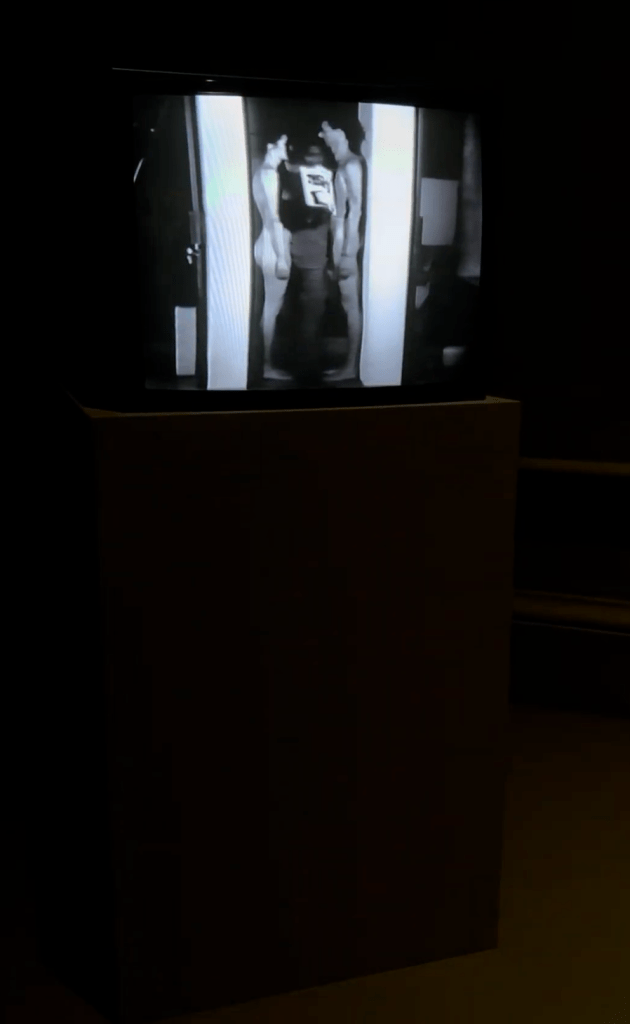
Before reading about the intention behind this performance, I didn’t quite get why we had to do that. It was puzzling, but I did it anyway.
Watching others take part was fascinating. Some people were visibly awkward, trying to keep a straight face, while others made an exaggerated show of being uncomfortable, perhaps as a defense mechanism. A few even smiled or giggled, treating the whole thing as a quirky, almost fun experience.
As for me? I entered the door facing the woman, and I found the experience mildly entertaining. But I couldn’t help wondering what it felt like for the models—to be standing there, serving as an entrance, as people filed past them.
Nude with Skeleton
This performance involved a woman lying completely still with a skeleton on top of her. For minutes, she lay there, almost blending into the lifeless bones as they moved together with each breath she took. The intimacy between her and the skeleton was, correct me if I’m wrong, the point of this performance. It’s an eerie embrace between life and death.
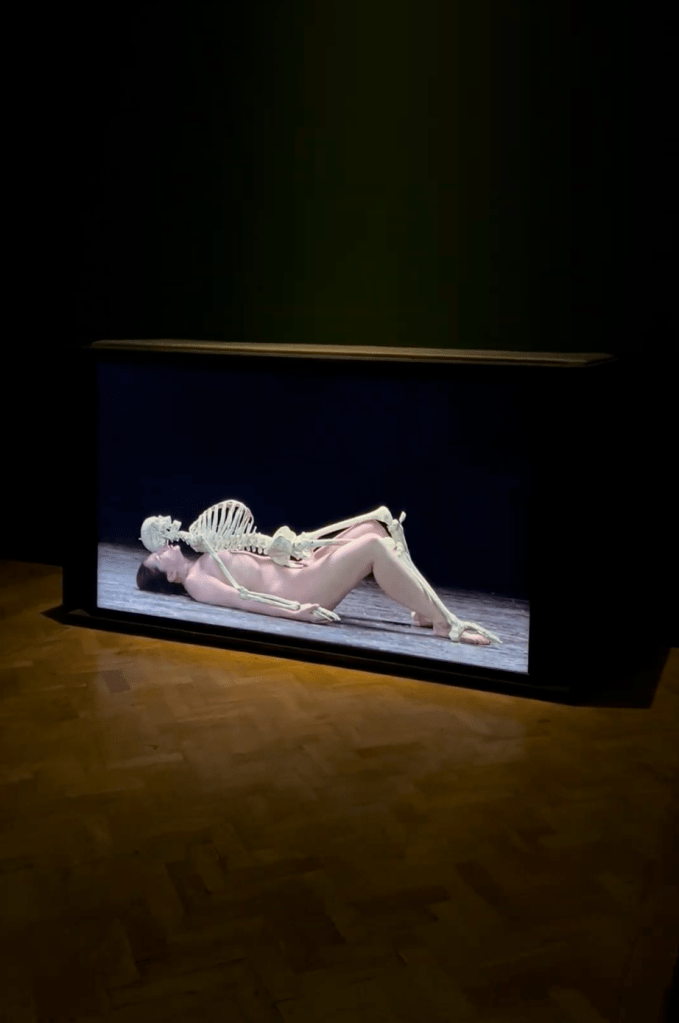
People came and went during the performance. The longer I watched, the more I questioned the meaning. Was it about our own mortality? About embracing the inevitability of death? Maybe.
I felt no dramatic emotions, just a quiet sense of contemplation—perhaps an admiration for the artist’s vulnerability in laying herself bare, literally and figuratively.
House with the Ocean View
This was the piece I stayed with the longest—probably because the performer herself stayed the longest.
In this performance, a woman lived in a structure resembling a small, bare house, while the audience watched her every move from comfortable chairs. The “house” was minimalistic, with sparse furnishings that limited her actions.
She took a shower at one point. Slowly, deliberately, she undressed and performed the act of showering—water splashing down, each movement precise, almost ritualistic.
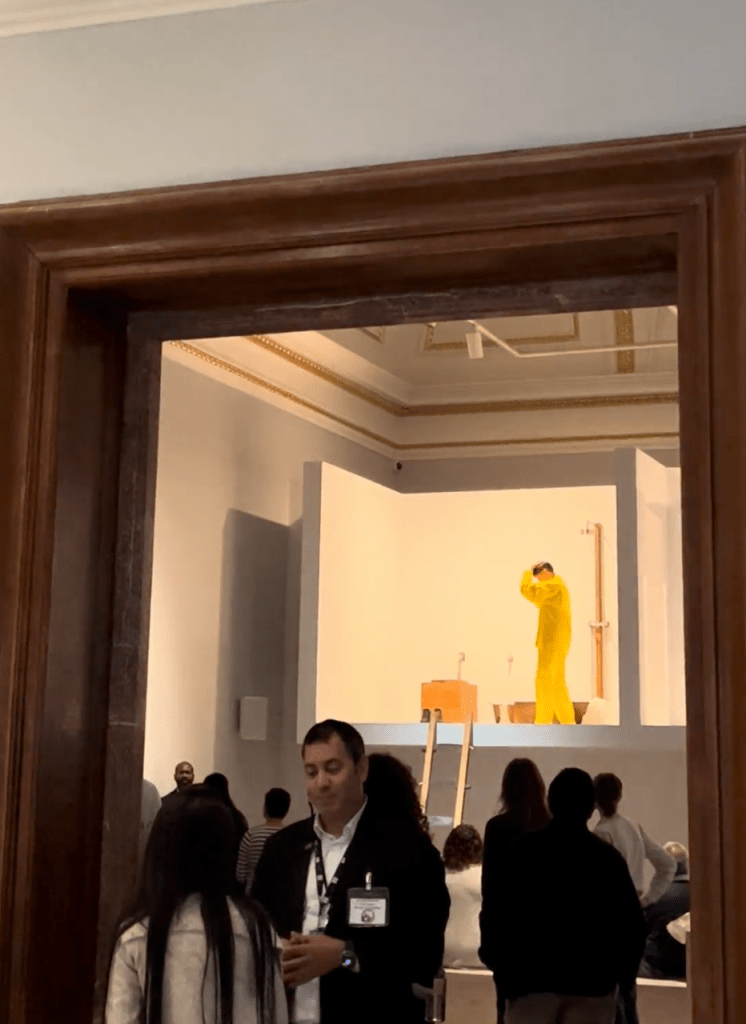
I’m not sure if there was soap involved—I can’t recall now—but what I do remember is the feeling of emptiness that washed over me.
She was alone, isolated in that house, repeating these mundane actions, and it all felt so utterly desolate. Watching her, I found myself confronted with a kind of existential emptiness—the “what’s the point of all of this?” feeling.
Other Works
The exhibition was expansive, taking up several rooms, each with its own concept and energy.
One room was filled with screens replaying Abramovic’s early works with her ex-partner Ulay—these were in black and white, grainy and evocative of another era. Their collaborations had a raw intensity, a mix of love, confrontation, and endurance.

Another room was filled with skeletons piled together, smeared with what appeared to be blood.
Each space felt like a journey into a different part of the human psyche—its darkness, its vulnerability, and its inevitable emptiness.
It seemed to me that the exhibition was a presentation of the bleak parts of the human experience, those unsettling truths we often ignore. And the fascinating thing is how, when these things are presented as art, we accept them without hesitation, letting them provoke us.
Souvenirs
I don’t usually buy souvenirs unless I can use the item. I found some useful ones from Marina’s merch, including this “Bad Ideas/Good Ideas” journal. As a writer, I couldn’t resist.

Aside from Abramovic’s merch, the Royal Academy of Arts gift shop also had more items worth looking at.
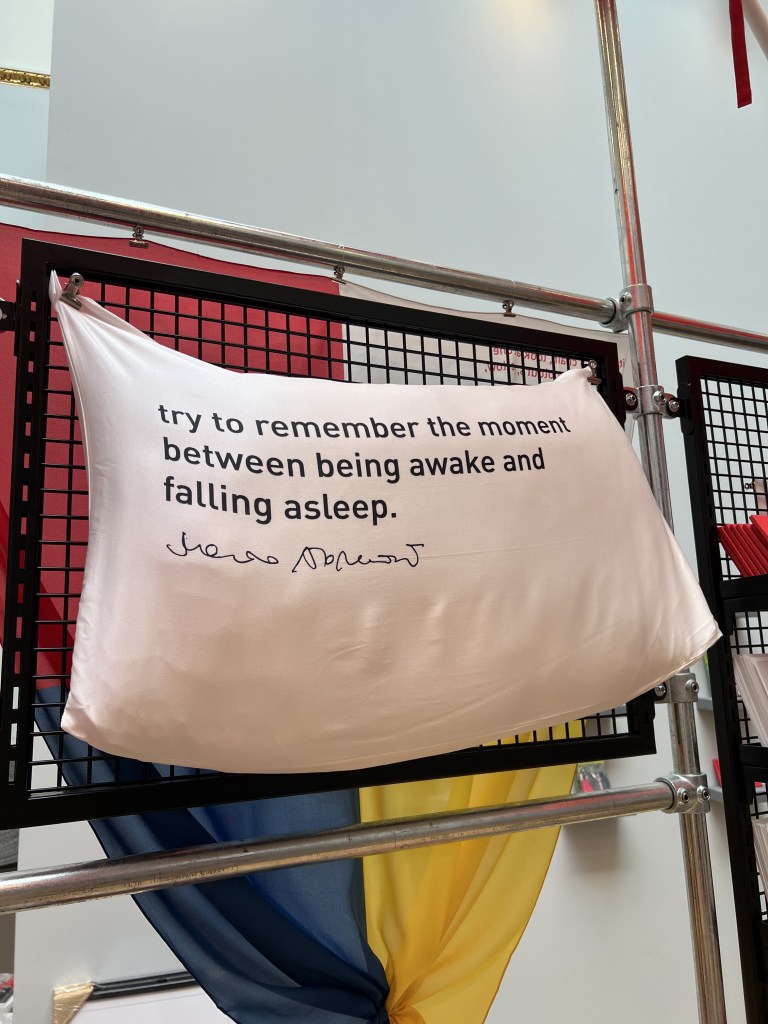
From a pillowcase with the quote, “Try to remember the moment between being awake and falling asleep,” to shawls and jewelry for women.
Royal Academy of Arts: Quick Guide
If you’re planning to visit the Royal Academy of Arts for an exhibition, here’s a quick guide to make your experience smoother.
First, book tickets in advance—some of these special exhibitions are sold out quickly, especially if they’re high-profile artists like Marina Abramovic.
The gallery is centrally located, a short walk from Piccadilly Circus, so you’re in the perfect spot for a post-exhibit coffee or meal at one of the many nearby cafés and restaurants. As for me, I headed straight to Hatchard’s Picadilly (London’s oldest bookshop) to pick up a signed copy of a thrilling fiction novel.
Allow yourself at least two hours for a full experience, especially if you like to linger and really absorb each work.
And if you’re lucky enough to be attending a performance art exhibition, be ready for the unexpected. It might not always be comfortable, but it will almost certainly be an experience you’ll be thinking about for a while.

Exploring Cotswold: Top Attractions You Can’t Miss
Is Cotswold worth visiting? Short answer: Absolutely. Long answer: If you like charming villages, rolling hills that look like a dreamy artist painted them, and a place where time feels like it’s politely slowed down to let you soak it all in… Then the answer is still YES! Grab a cup of tea (bonus points…

Top Animal Encounters at Cotswold Wildlife Park
From elusive Pallas cats to picnic-perfect spots and a scenic train ride, I give Cotswold Wildlife Park a five-star rating. It’s the kind of place I’ll happily get wild for!

The Only Sagada Guide You’ll Need: Must-See Sights, Food, & Local Secrets
Plan your adventure in Sagada, one of the most beautiful mountain towns in the Philippines. Dive into a detailed 5-day itinerary that smartly organizes attractions by location and best visiting times. As always, created based on my experiences to help you make the most of your visit.

Leave a comment