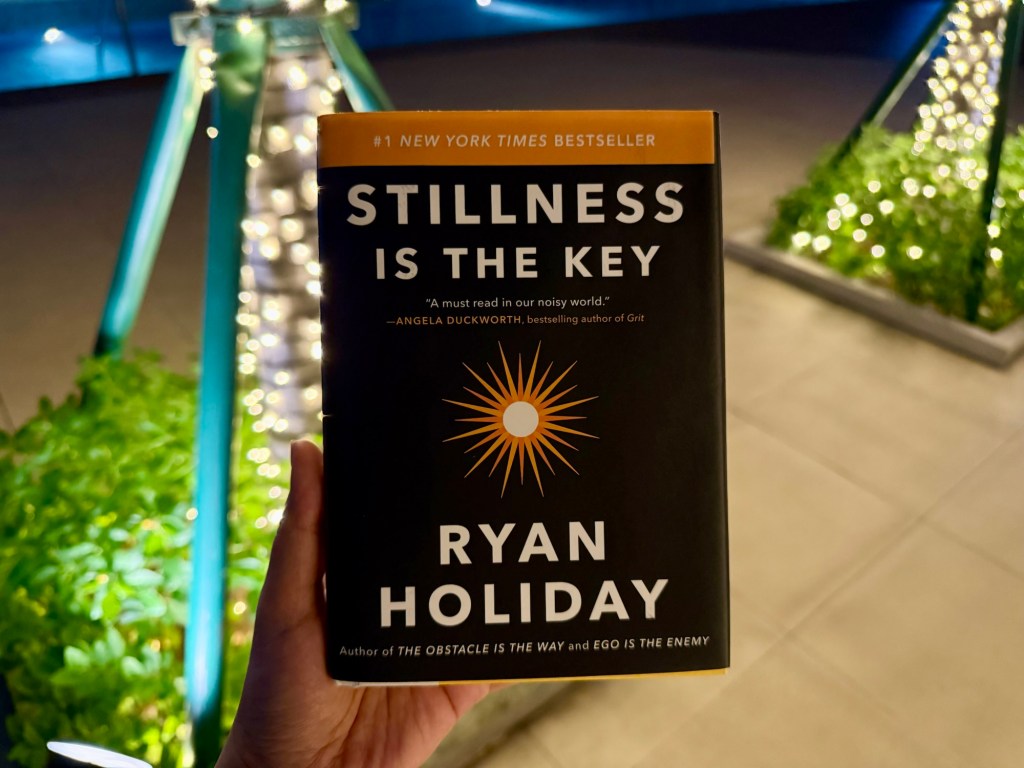
Today is the second-to-last Sunday of the year. As the days wind down, I wanted to share something meaningful—something you can carry with you into the coming year.
I’ve found just the thing: Stillness Is the Key by Ryan Holiday. I read this book a few years ago, and it’s stayed with me ever since because it’s one of those rare books that irrevocably shifts your perspective.
These days, when life feels louder and more chaotic than ever, I think about its lessons often. And I imagine I’m not alone in craving stillness—whether you realize it or not.
Holiday divides the book into three parts: Mind, Spirit, and Body. Each offers its own wisdom and guidance for living a more peaceful, intentional life. As we step into 2025, I’d like to share a few of these lessons with you.
MIND
If you’re working toward a goal, this is for you.
I know sometimes it feels like you’re never going to reach that dream because it’s so difficult. Or the process is long. But this passage from Holiday’s book reminded me that if I’m ever going to reach that lifelong goal of mine, I have to trust myself first:
“Whatever you face, whatever you’re doing will require, first and foremost, that you don’t defeat yourself. That you don’t make it harder by overthinking, by needless doubts, or by second-guessing.”
It’s a reminder I’ve clung to. Every single day, I’ve put in the work, and two years later, I’m finally within reach of a dream I’ve carried my whole life. Progress comes slowly, but it comes.
So as long as you put in the work and just focus on it—no doubting, no giving up—eventually you will get there.
On distractions, I love how Holiday reminded me that the only thing we have is the present. So when we find our minds drifting aimlessly to the future, or even back to the past, to gently nudge it back to here. To the present. We have a goal to work on, and we need all the space in our minds to work on that.
Eventually, all the things we thought were equally important and needed our attention will just figure themselves out, even without your help:
“The important stuff will still be important by the time you get to it. The unimportant will have made its insignificance obvious (or simply disappeared). Then, with stillness rather than needless urgency or exhaustion, you will be able to sit down and give what deserves consideration your full attention.”
Always think about what you’re really being asked to give. Because the answer is often a piece of your life, usually in exchange for something you don’t even want. When we know what to say no to, we can say yes to the things that matter.
Time is your life—your flesh and blood—and it’s something you can never get back.
SPIRIT
With stillness of mind comes the ability to heal the spirit.
For many of us, that means facing the wounds we carry from childhood. These hidden scars shape so much of who we are—often without our realizing it. But mindfulness gives us a way to meet these emotions with compassion:
“After recognizing and embracing our inner child, the third function of mindfulness is to soothe and relieve our difficult emotions. Just by holding this child gently, we are soothing our difficult emotions and we can begin to feel at ease. When we embrace our strong emotions with mindfulness and concentration, we’ll be able to see the roots of these mental formations. We’ll know where our suffering has come from. When we see the roots of things, our suffering will lessen. So mindfulness recognizes, embraces, and relieves.”
Holiday’s words remind me how much lighter life can feel when we stop reacting from a place of childhood pain. This work is not easy, but it’s worth it. By acknowledging these wounds, we can begin to move forward with intention and peace.
He also highlights the power of choice:
“The gift of free will is that in this life we can choose to be good or we can choose to be bad. We can choose what standards to hold ourselves to and what we will regard as important, honorable, and admirable. The choices we make in that regard determine wheter we will experience peace or not.”
We owe it to ourselves as well as to the people in our lives to do this. Each of us must break the link in the chain of what the Buddhists call samsara, the continuation of life’s suffering from generation to generation.
Give more. Give what you didn’t get. Love more. Drop the old story.
BODY
Finally, there’s the body.
Mens sana in corpore sano—a strong mind in a strong body.
I used to be the kind of person who didn’t value sleep. But as I’ve grown older, I’ve come to see how essential rest is—not just for the body, but for the mind and spirit too.
Holiday speaks to this beautifully:
“People say, “I’ll sleep when I’m dead,” as they hasten that very death, both literally and figuratively. They trade their health for a few more working hours.
If we treat sleep as a luxury, it is the first to go when we get busy. If sleep is what happens only when everything is done, work and others will constantly be impinging on your personal space.”
No sleep, most likely no good decisions. Good decisions aren’t made by those who are running on empty.
What kind of life can you have, what kind of thinking can you do, when you’re utterly and completely overworked? We have only so much energy for our work, for our relationships, for ourselves. So protect your sleep. Because it’s where the best state of mind comes from.
Of course, caring for the body also means acknowledging its impermanence. While most of Holiday’s book has been about how to live well, it is also about how to die well. Because they are the same thing.
This resonated so much with me because I’ve been thinking about death a lot lately. And not in a suicidal kind of way. But more of the awareness that death could come anytime. And if I will be at peace with it when it comes.
Holiday reminds us of this universal truth:
“None of us are long for this world. Death hangs over us all, whether we notice or not, whether we believe it or not.
Our hearts beat without fail for an uncertain amount of time, and then one day, suddenly, it is still.
Memento mori.”
If we accept that our time is finite, we can focus on living well—on being present and cherishing the moments we have.
Final Thoughts
In the end, chasing after stillness of the mind, spirit, and body isn’t really just for you. It’s for the people you love too—the ones who’ll benefit so much from your healing—even long after you’re gone.
When you cultivate peace within yourself, it radiates outward, touching everyone around you.
Start small: journal your thoughts, take a quiet walk, or set aside five minutes to simply breathe. These moments of stillness add up, transforming your life and the lives of those around you.
Let’s live better and be better. No regrets, no wasted time.
“Pass through this brief patch of time in harmony with nature. Come to your final resting place gracefully, just as a ripened olive might drop, praising the earth that nourished it and grateful to the tree that gave it growth.”
– Marcus Aurelius
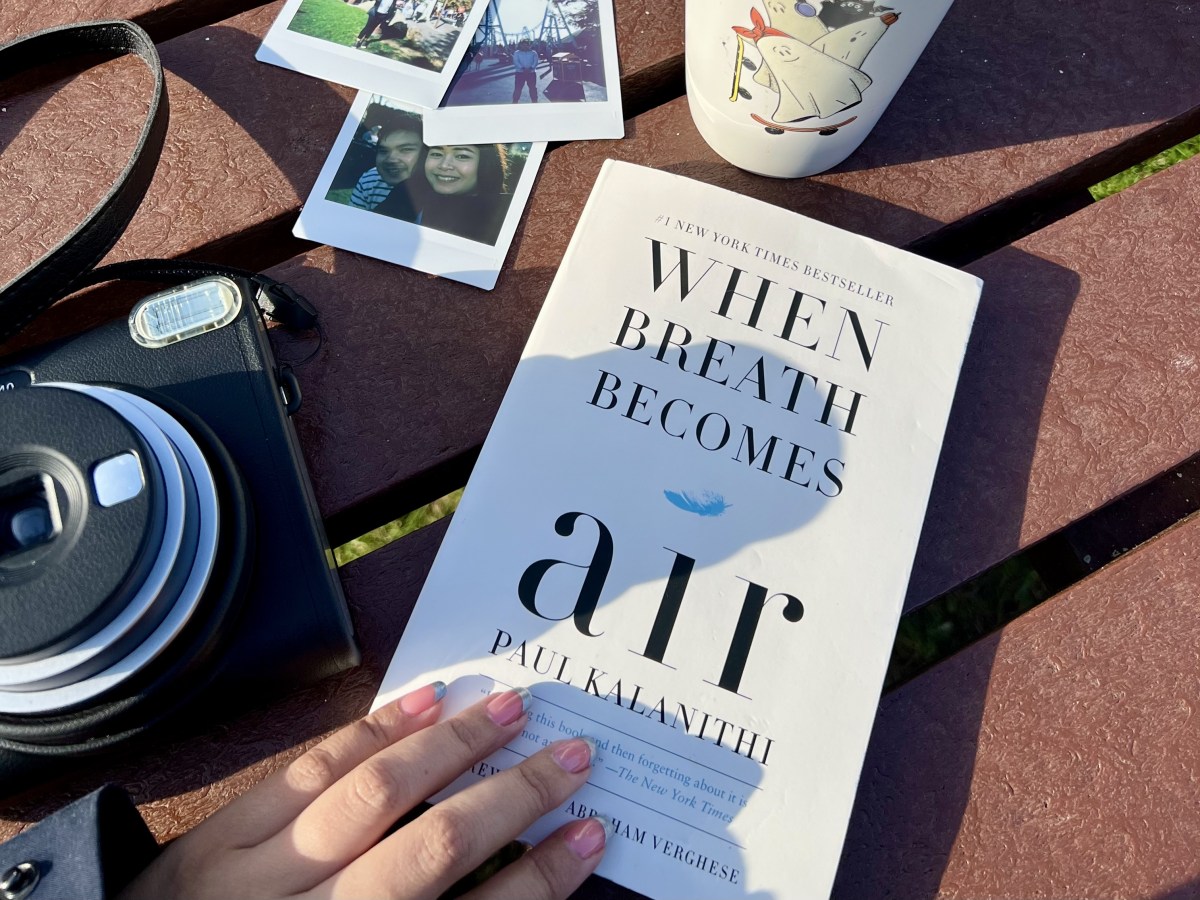
Embracing Life, Death, and the in Between: A Reflection on Paul Kalanithi’s ‘When Breath Becomes Air’
In the quiet contemplation of our inevitable end, we often find the courage to truly live. Paul Kalanithi’s “When Breath Becomes Air” is an unclouded reminder of this truth. A testament to a life fully lived in the face of death.
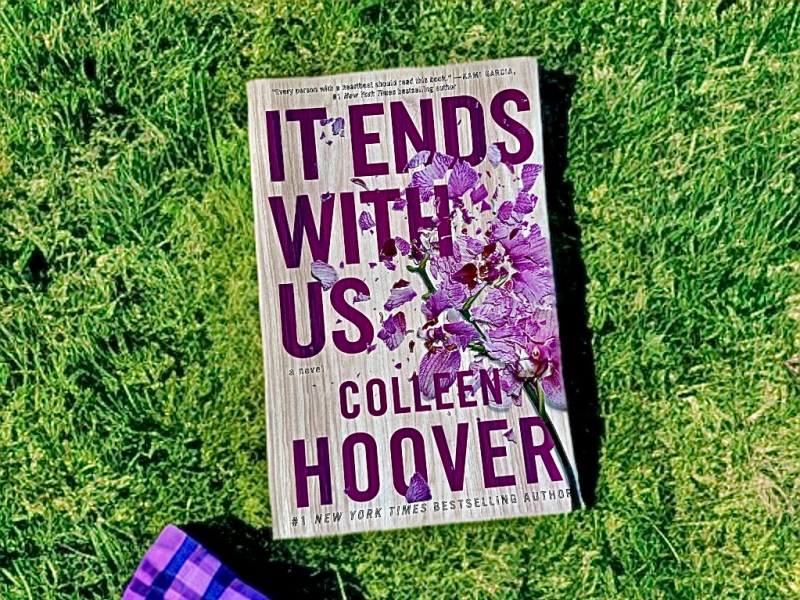
‘It Ends With Us’ by Colleen Hoover: Lessons About Love, Trauma, and Growth
For once in my life, I can say this: I rate the movie higher than the book. But this isn’t a book review. Nor is it a movie review. So I won’t dwell on why. Instead, I want to share the lessons that hit home for me while watching the film. (Spoilers ahead!)

Review of The Time Traveler’s Wife Musical in London
I went to London to watch The Time Traveler’s Wife musical because, like any self-respecting fan of Audrey Niffenegger’s novel, I had to see how they pulled this off on stage. So I booked my ticket for the first week of the show, hopped on a plane, and found myself in a West End theater, buzzing…

Leave a comment