- Background: Mt. Pinatubo and Its Resilient Inhabitants
- What to Expect in Mt. Pinatubo Tours
- How to Get to Mt. Pinatubo
- Mt. Pinatubo Itinerary: From Jeepney Ride to Summit Views
- What to Pack to Mt. Pinatubo
- Frequently Asked Questions
I’ve always wanted to hike Mt. Pinatubo because it’s home to one of the most beautiful natural landmarks in the Philippines. And now that I have, I’m here to share everything I know and learned about this beautiful disaster.
If you’re planning to hike Mt. Pinatubo or want to know if this is something you should add to your itinerary, read this hiker’s perspective to help you decide.
Background: Mt. Pinatubo and Its Resilient Inhabitants
Mt. Pinatubo is an active stratovolcano located in the Zambales Mountains on the island of Luzon. It’s one of the most dangerous volcanoes in the world, with its 1991 eruption the second-largest of the 20th century.
As of 2024, Mt. Pinatubo is still considered to be dormant. It’s not currently erupting but could erupt again in the future. The last eruption of Mt. Pinatubo was in 1991, which caused widespread destruction to the surrounding area. The eruption killed over 800 people and displaced over 2 million people.
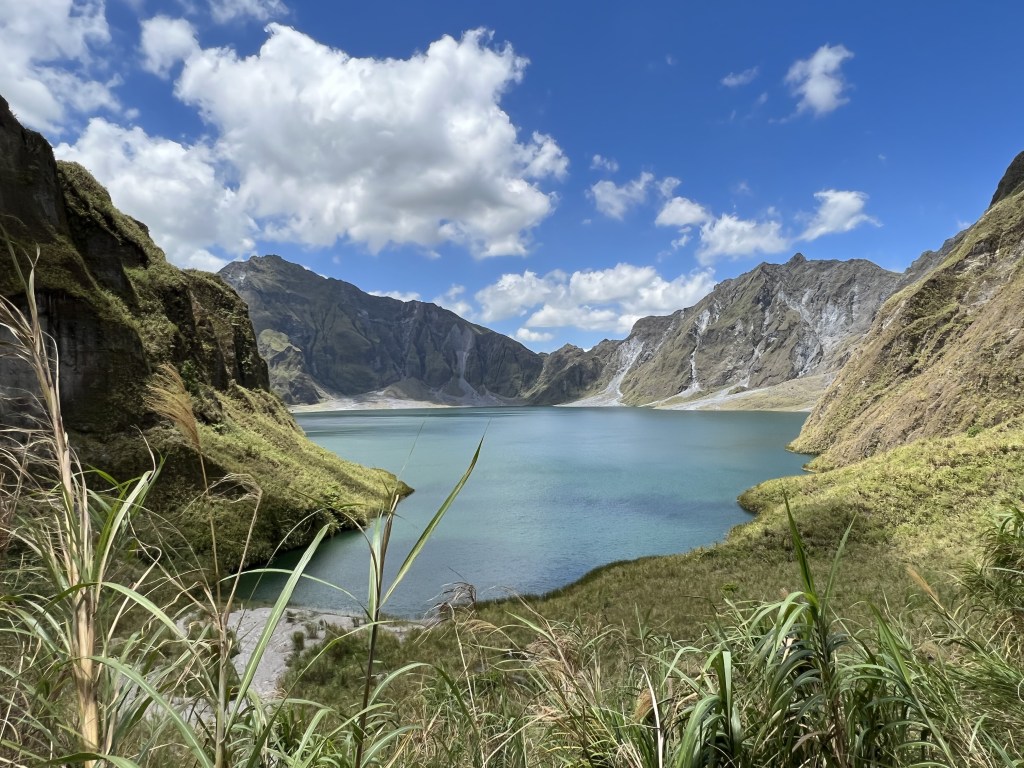
The 1991 eruption also inadvertently sculpted a breathtakingly beautiful new landmark: Pinatubo Lake, or Beautiful Disaster as the locals call it. The cataclysmic blast ripped through the mountain’s peak, forming a colossal 2.5-kilometer-wide caldera. This gaping wound in the Earth’s crust then began to fill with rainwater and runoff, slowly birthing a turquoise gem amidst the ash-scarred landscape. This is the hauntingly beautiful view that welcomes visitors who reach the summit.
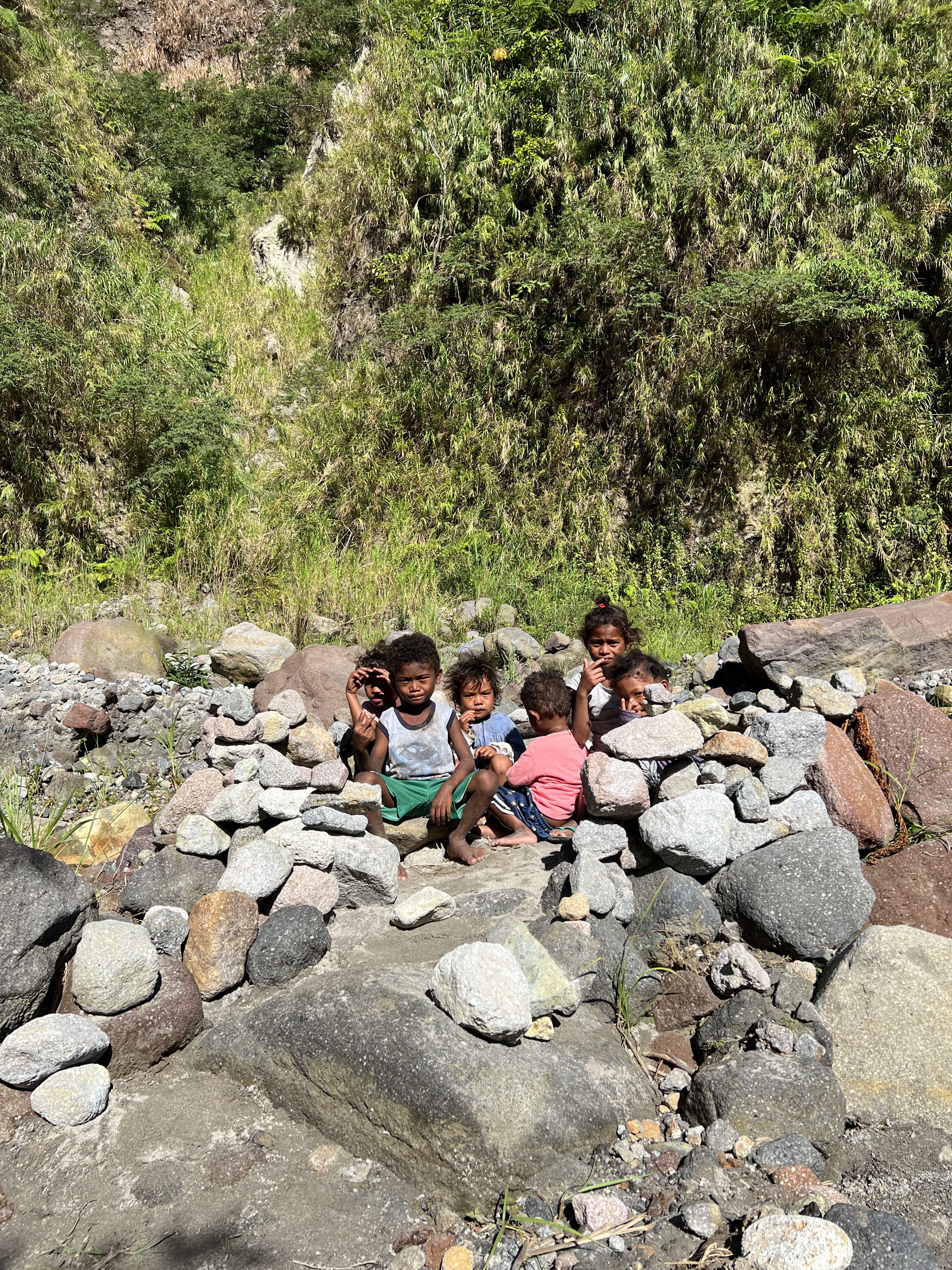
There are indigenous tribes that live in the surrounding area. The most well-known of these tribes is the Aeta people. The Aeta people have lived in the area for centuries, and they have a deep connection to the land. After a brief interview with the locals, I learned that there’s a small school where the kids go plus a humble Christian church built years ago by missionaries.
What to Expect in Mt. Pinatubo Tours
Joiner Trips
For those unaware, a joiner trip is you joining with a bunch of other people to form a group. You will decide what date to go and then pay your portion of the total cost of getting there from a specific destination (usually from Manila). The point of a joiner trip is to lower the total cost for you since you’ll be joining a group instead of paying for everything yourself. You’ll share most of the travel expenses as well as the cost of a tour guide.
You can find joiner tours to Mt. Pinatubo on Facebook groups. Just type “Mt. Pinatubo joiner tour” and a few should pop up.
If you’re planning to be a joiner, be aware that you will have to share this experience with strangers. It’s a good opportunity to meet new people and make new friends. Joiner tours typically implement a buddy system, where you have to keep an eye on your assigned partner for the entirety of the hike. If you slow down, or if you need to take a breather and fall behind, the tour guide and your buddy will stay with you to make sure you are safe. I know this because… I experienced it! I fell behind (haha).
Private Tour
An alternative is to book a private tour from a certified Mt. Pinatubo tour agency. The rate of the tour per person depends on the number of people in your group. The more people, the less that each person will have to pay.
These packages typically shoulder your roundtrip transportation (usually from Manila and back). Your driver will take you to a homestay in Capas, Tarlac. From there, you will alight and get ready for the hike. Some tours include a light breakfast and hot coffee, which will be served upon your arrival to the homestay.
The tour guides will also arrange all the paperwork so your group can hike without worrying about any of those things. They will also pay the environmental fees and tour guide fees. When you book a Mt. Pinatubo tour from a certified tour agency, you won’t need to pay for anything else on the day of your trip. Except for gratuity tip for your local tour guide which is optional but highly recommended.
To summarize, the Mt. Pinatubo tour fee typically covers:
- Roundtrip transportation (usually from Manila)
- Light breakfast
- Environmental fee
- Paperwork processing before the hike
- Tour guide
- 4×4 jeepney ride to the trailhead
If you’re planning to book a tour, be aware that it’s not going to be self-paced. You will have to be considerate of your tour guide’s time. You will most likely have to leave the homestay before sunrise and return after staying for an hour or two at the summit.
How to Get to Mt. Pinatubo
From Manila:
By van or bus: Take a van or bus from Manila to Capas, Tarlac. The journey takes around 3-4 hours.
By car: The drive from Manila to Capas takes around 2-3 hours. Take the North Luzon Expressway (NLEX) and exit at Capas.
From Capas:
By 4×4: From Capas, take a 4×4 ride to the starting point of the hike. The 4×4 ride takes around 2 hours.
By motorcycle: You can also take a motorcycle to the starting point of the hike. The motorcycle ride takes around 1-2 hours.
Mt. Pinatubo Itinerary: From Jeepney Ride to Summit Views
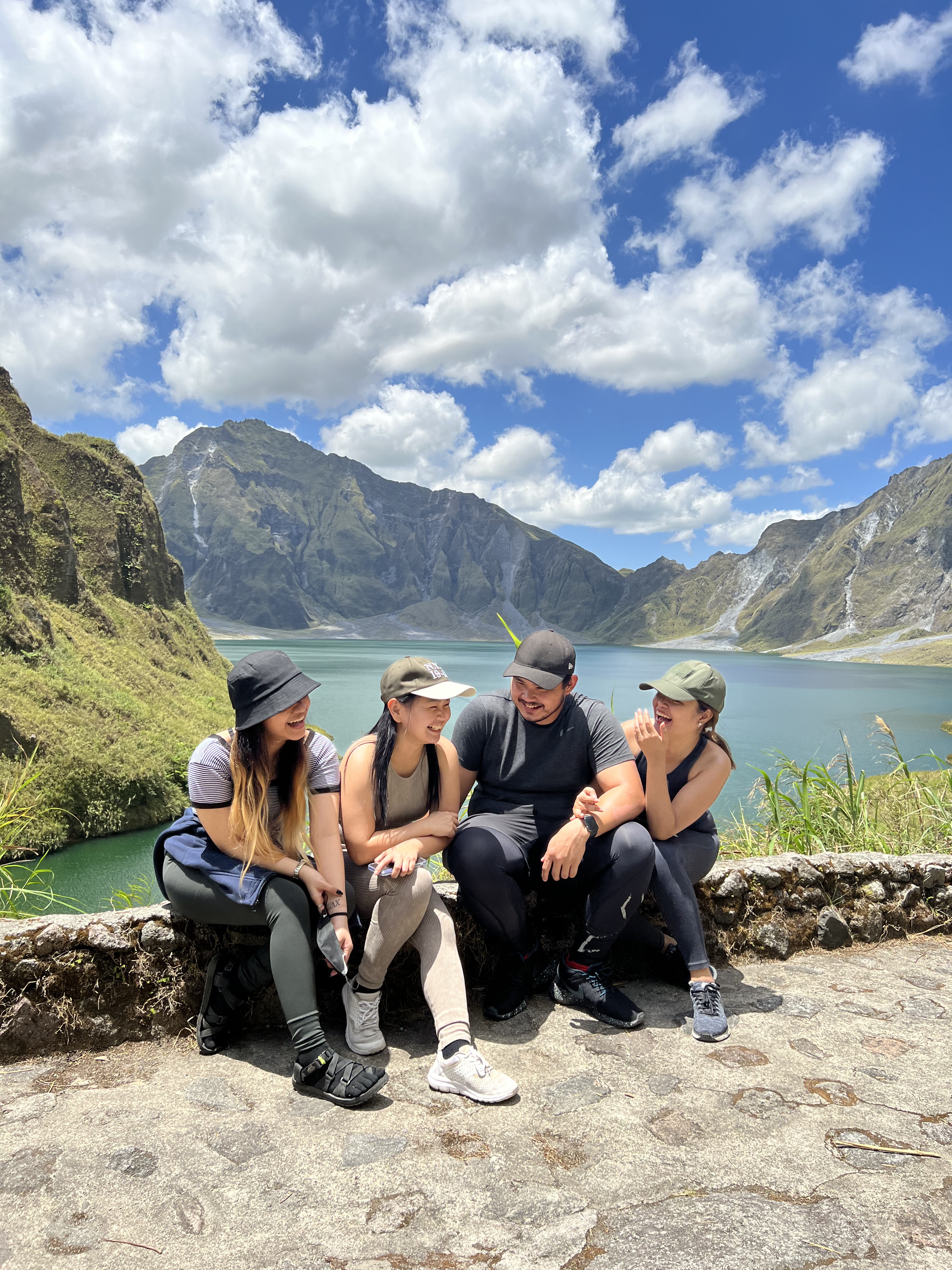
2:00 AM Departure from Manila – We were a group of 4. We booked a private tour from Mt. Pinatubo Tour Philippines via Facebook Messenger. We left Manila using a our own car, so we paid less because we didn’t avail of the roundtrip transportation. We arrived in Capas, Tarlac at 4 AM. The two-hour drive includes time spent stopping over at a gas station for a restroom break.
If you book a Mt. Pinatubo tour and decide to drive your car to Capas, you will be given a pin location and directions to the homestay in Capas, Tarlac.
Important: We passed by a gate that is manned by military personnel. We don’t know why, but we also saw a few military jeeps during the day when we hiked back down. I suspect this is because this part of the country is remote and is a protected area. If you drive your own vehicle, you will be asked where you are heading. We simply showed our booked tour. The driver had to show a valid ID. And then we went on our merry way.
4:00 AM Arrival in Capas – We arrived at the pinned location just in time for the call time. It was still dark out. As someone living in Manila, it still surprises me every time I see a constellation of stars in the sky. I looked up, and there they were. It’s a reminder of how far I am from Manila. Anyway, we were welcomed into the house, where we were asked to settle down for a bit while our breakfast was still being cooked. It’s a family home, and I suspect that they get paid by the tour agency to be our host. There were also a couple of public restrooms outside the house with a toilet and a shower.
After breakfast, we had some time to take photos and explore the neighborhood. Our tour guide went ahead and arranged all the paperwork for us. We just needed to sign the document to certify that we were fit to climb. Our tour guide also lent us hiking sticks for free! We got to take them home.
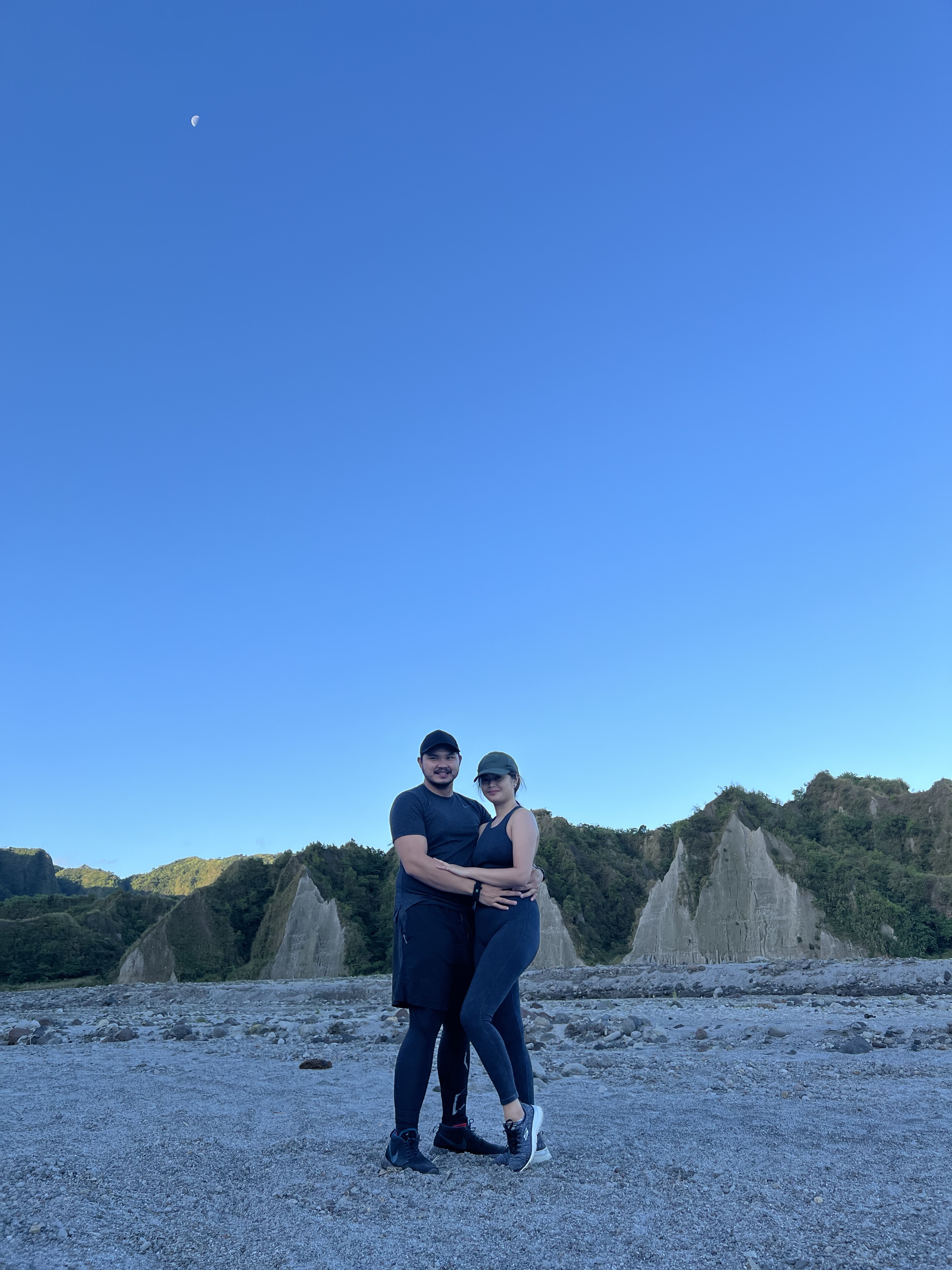
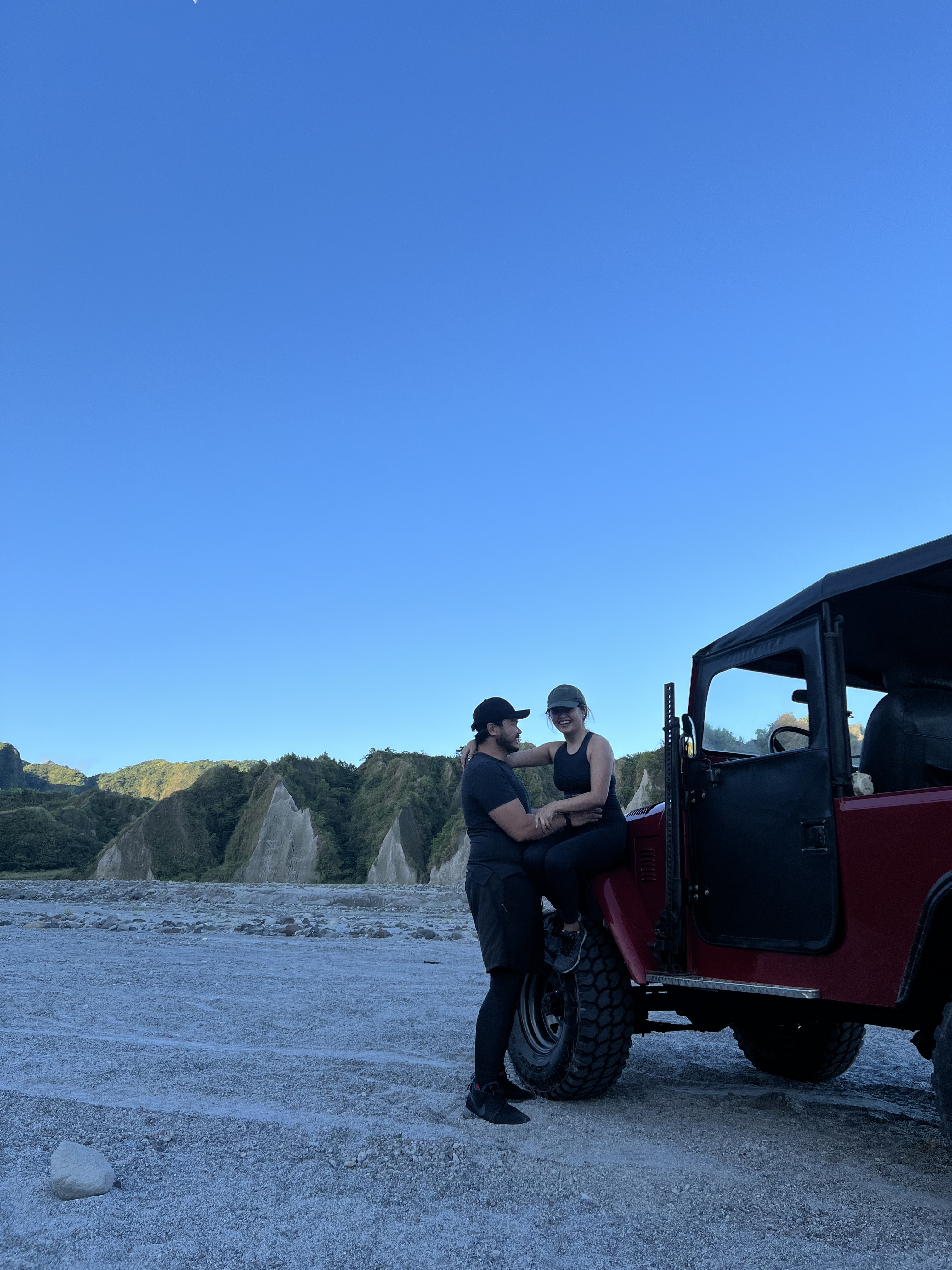
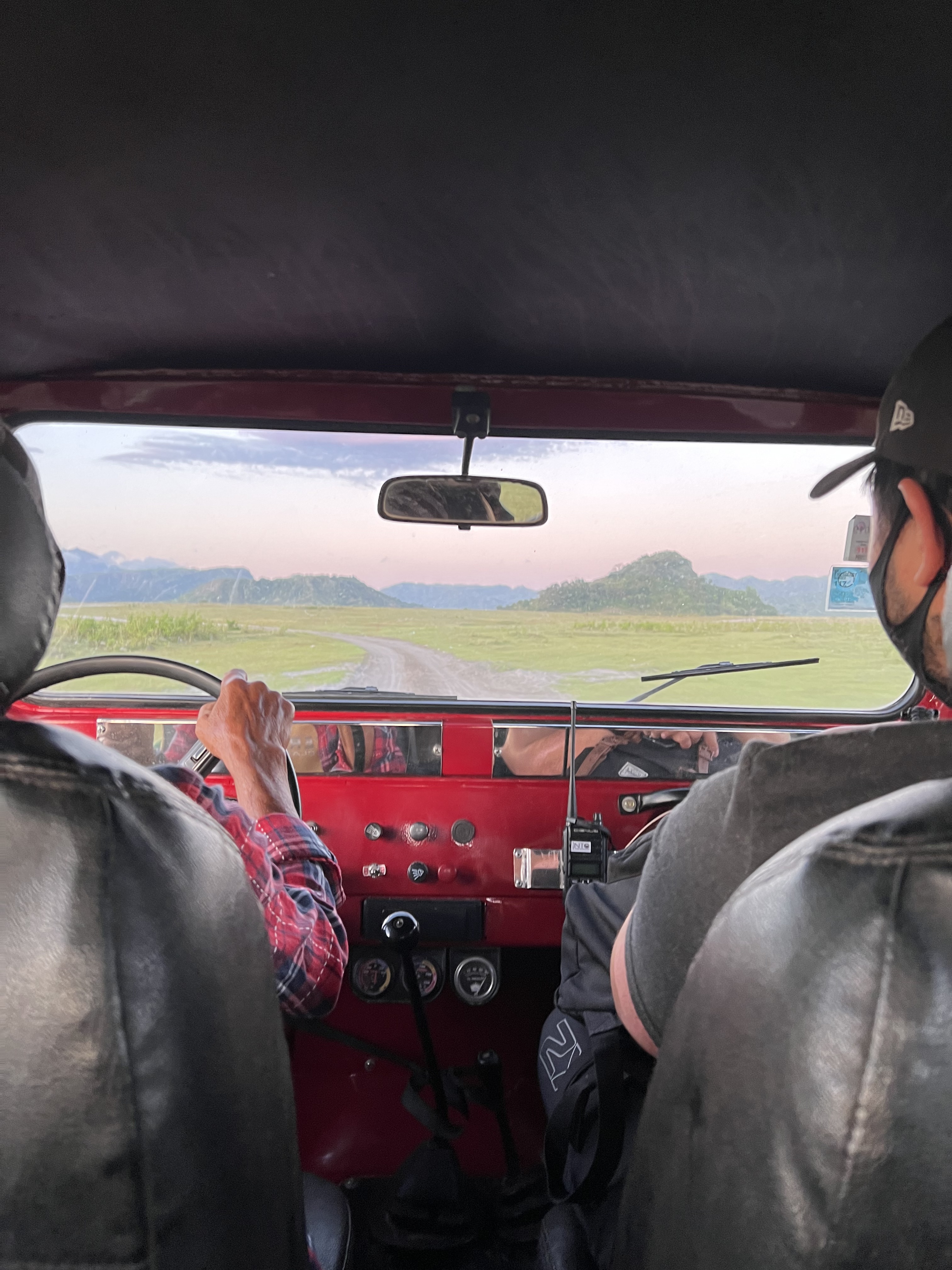
5:30 – 6:30 AM – Once our tour guide got the paperwork done, we were good to go! By this time, the sun was coming out already. Not quite a full sunrise yet, but we can already see a long line of 4×4 Jeepneys on the side of the road. We were free to choose the 4×4 jeep we wanted. I have no idea who owns those jeeps, but they were all just lined up there free for choosing. Someone else drove the jeep, while the tour guide sat with us at the back. The passenger seat was free for anyone who wanted to ride shotgun, so one of us did.
It was roughly an hour-long jeepney ride. The ride was rocky, but unless it’s raining, you won’t get wet. Some parts were muddy though. We stopped by this rock formation that the locals have dubbed the Toblerone because it looks like a Toblerone chocolate. We were the first to get there before anybody else, so we had a few minutes to take photos without the crowd.
The local government limits the number of people that hike to Mt. Pinatubo daily. So even when the crowds start to arrive, you can still take photos with the Toblerone as a background without anybody else ruining your good photo. You can also take photos with the 4×4 jeep, as part of your Instagram aesthetic.
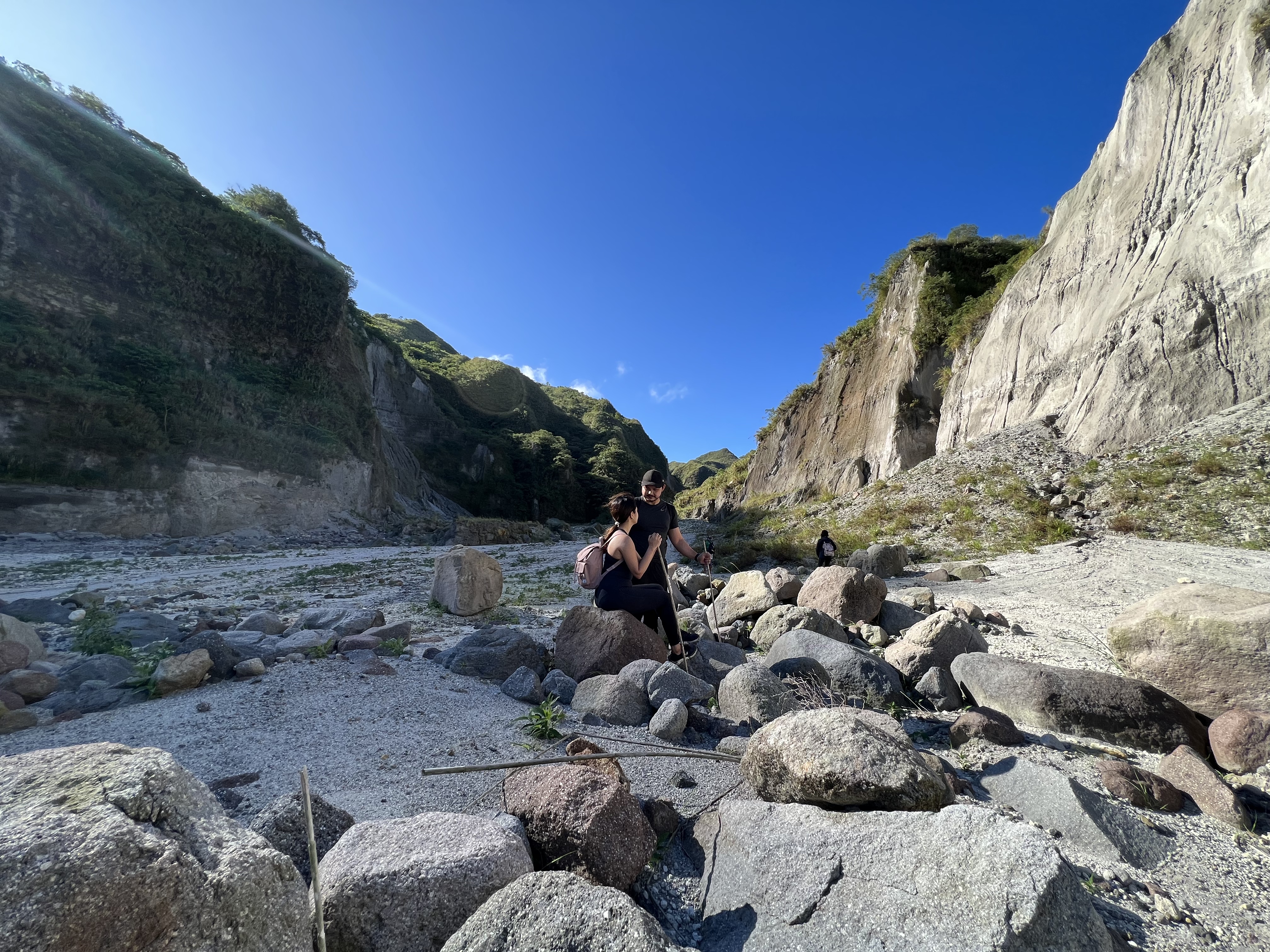
6:30 – 9:00 AM – Once you get to the trailhead, you will get down the jeep and walk from there. The jeep can no longer take you further because the rest of the way is rocky and not suitable for vehicles. Only a few parts are uphill, but the hike is mostly flat (or it feels like it). The main challenge is to not trip from the rocky roads. A hiking stick should help steady you. You will also cross small shallow streams along the way, depending on the water level, but nothing too dangerous. The tour guide happily helped me and guided me whenever I needed help crossing.
By 8 AM, the sun is fully out and you will feel it in your skin. It started to get warm, although I didn’t really sweat too much because of the cold air. You are still surrounded by trees after all. Also, you will be walking in the middle of two valleys, so the height of the shadows will protect you from the sun, at least for this time. We also enjoyed meeting some Aeta kids who were playing. Some of them are hanging out on top of trees too, which reminded me of summer days spent in the province as a kid.
Approximately 30 minutes before you reach the summit, you will reach this hut where you can take cover from the sun for a while. You can also buy snacks and drinks there. The rest of the way is mostly uphill. For me, this is the most challenging part of the hike. There is a sign that says the hike will take 20 minutes more, but for us, it took 30. The hiking trail gets narrower, with more trees flanking you and streams too. Before you get to the crater lake, you will have to climb steep cemented stairs.
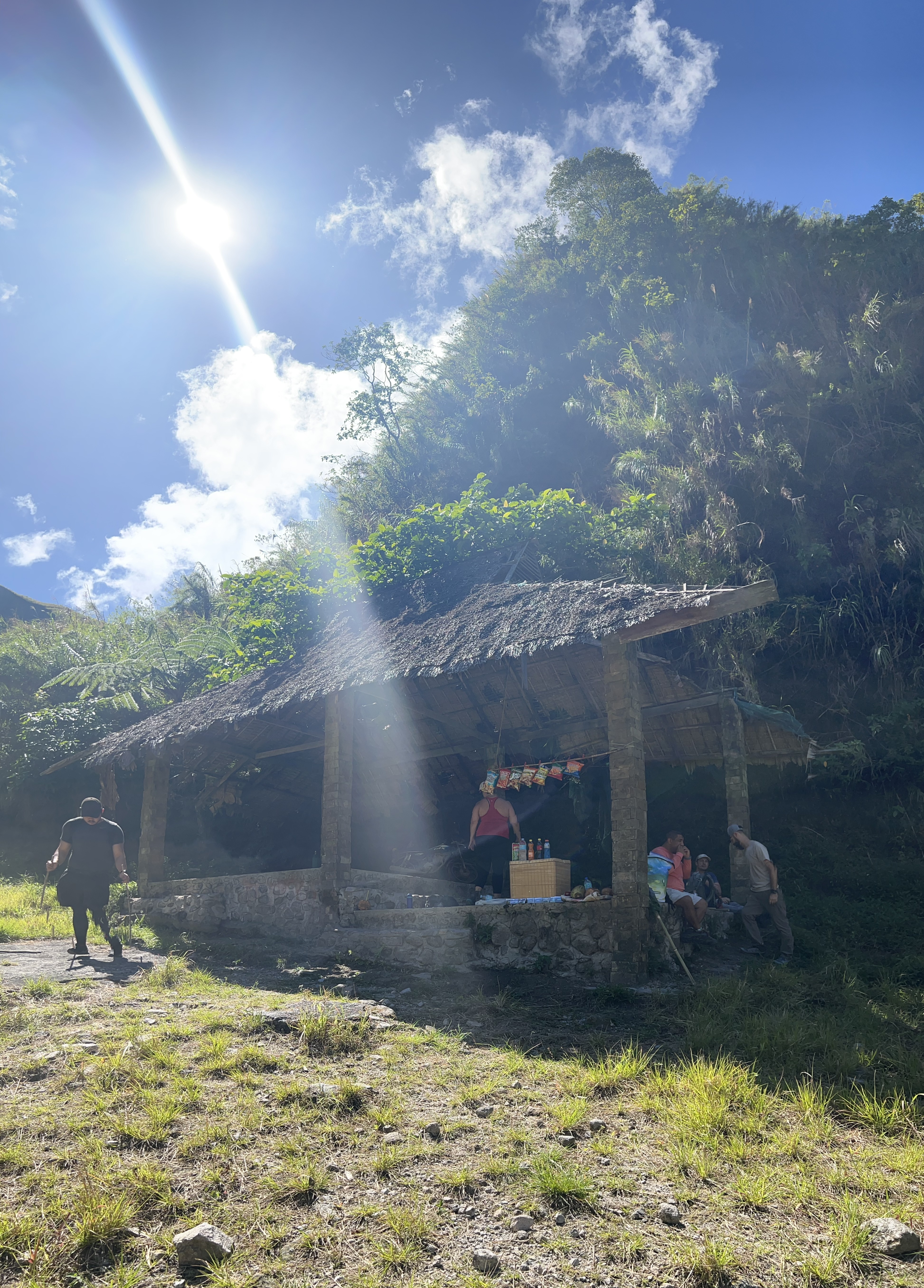
There is no restroom for the rest of the way until you get to the top, where there are two restrooms. Note though that this is a very basic restroom. It has no roof and and the toilet has no flush, so you will have to pour water into the bowl.
9 AM – 11 AM – The ideal time to reach the summit (also called the viewing deck) is 9 AM. Once you reach the top, there really is nothing left to do but take a moment to admire the crater lake. It’s just breathtaking, as shown in the video I shared below. There are no chairs there, so you will have to lie down on the ground, but don’t worry about the mud. The ground is cemented. There are also many trees to lie down next to for some shade. You have approximately two hours to enjoy the view, eat, and spend time with your group.
You can go down to the crater lake. However, you have to ask your tour guide before the trip if you really want to do this because there are some days when they don’t allow it due to the sulfur coming out of the lake. Nevertheless, even if you don’t go down, the view is just as amazing from the top. Personally, I appreciate the view from the viewing deck because of the eagle’s eye view. See the video below.
11:00 AM – 1:00 PM – Before noon, the tour guides will start herding the groups back down. The journey back should be faster, but for some reason, it took just as long for me. I think this was partially because of the afternoon heat. The sun drained my energy and made me walk slower. If you’re wearing sleeveless, the heat will most likely burn your skin. I know because one of us got a sunburn (a.k.a. me!). Don’t forget to reapply sunscreen before you head back down. And wear a jacket to protect your skin as well!
12 PM to 1 PM 4×4 trail ride to jump off – Once you reach the jump off point, the 4×4 jeep should be there to take you back to the homestay. We took a shower, then ate the lunch that our host cooked for us.
You’re free to explore the rest of the neighborhood and talk to the locals if you came with your own car. But if your tour guide includes roundtrip transportation, you’ll have to leave by 1:30 PM.
What to Pack to Mt. Pinatubo
You will be hiking for a total of 4-5 hours roundtrip, so I suggest not to carry too much. Carrying only the essentials should help you enjoy the hike more and get to the summit much faster:
- 1 Liter (or more) Insulated Water Bottle
- Wet wipes and toilet paper
- Extra UV Protection Long Sleeve Shirt / Moisture-Wicking Clothes
- Extra socks (if your feet get wet)
- Packed lunch and energy snacks
- Raincoat (in case of rain)
- Sunscreen
- Sunglasses
- Cap or hat
- Hiking pole (some tour guides lend this for free)
- Cash (to purchase snacks or souvenirs)
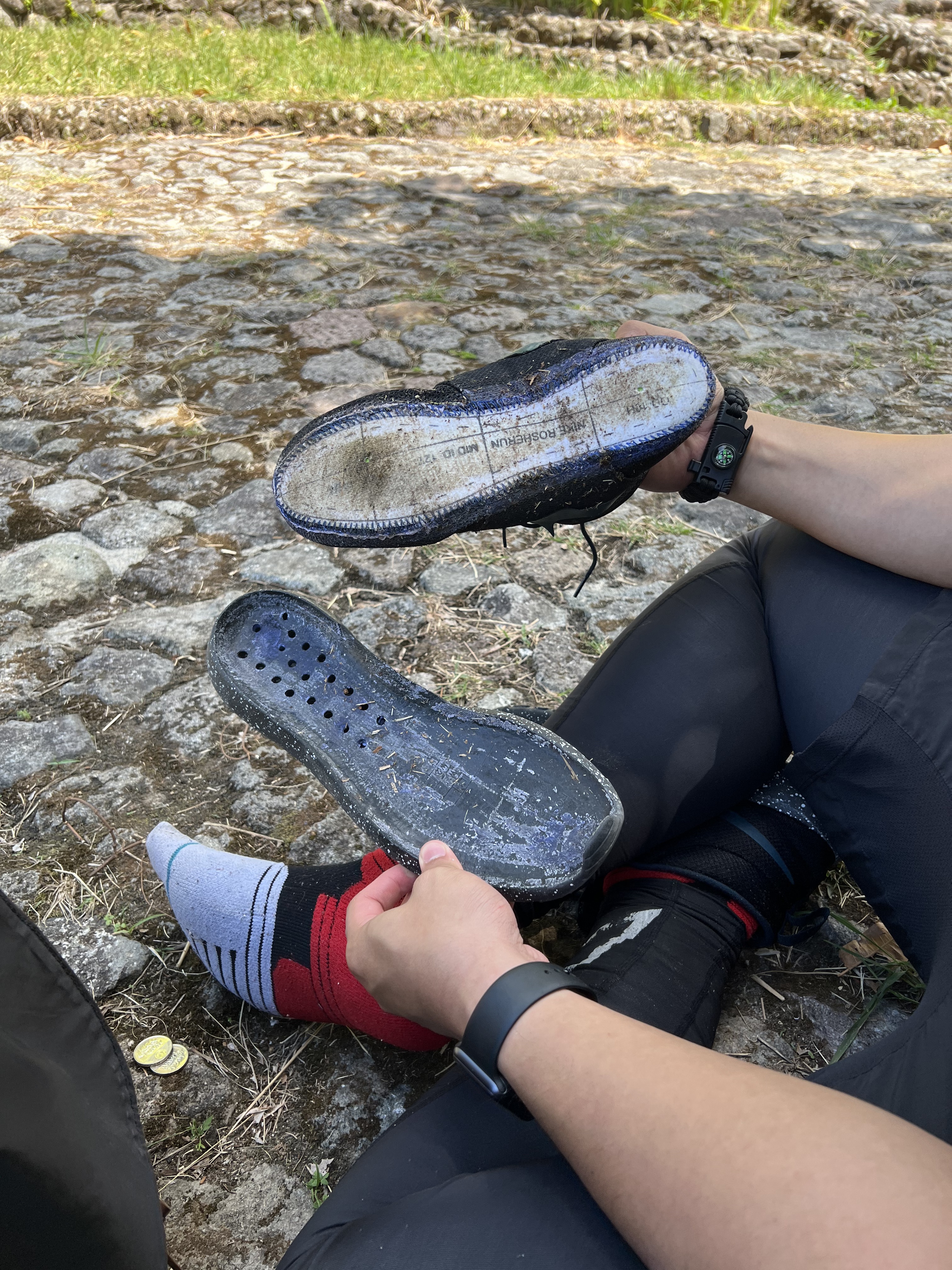
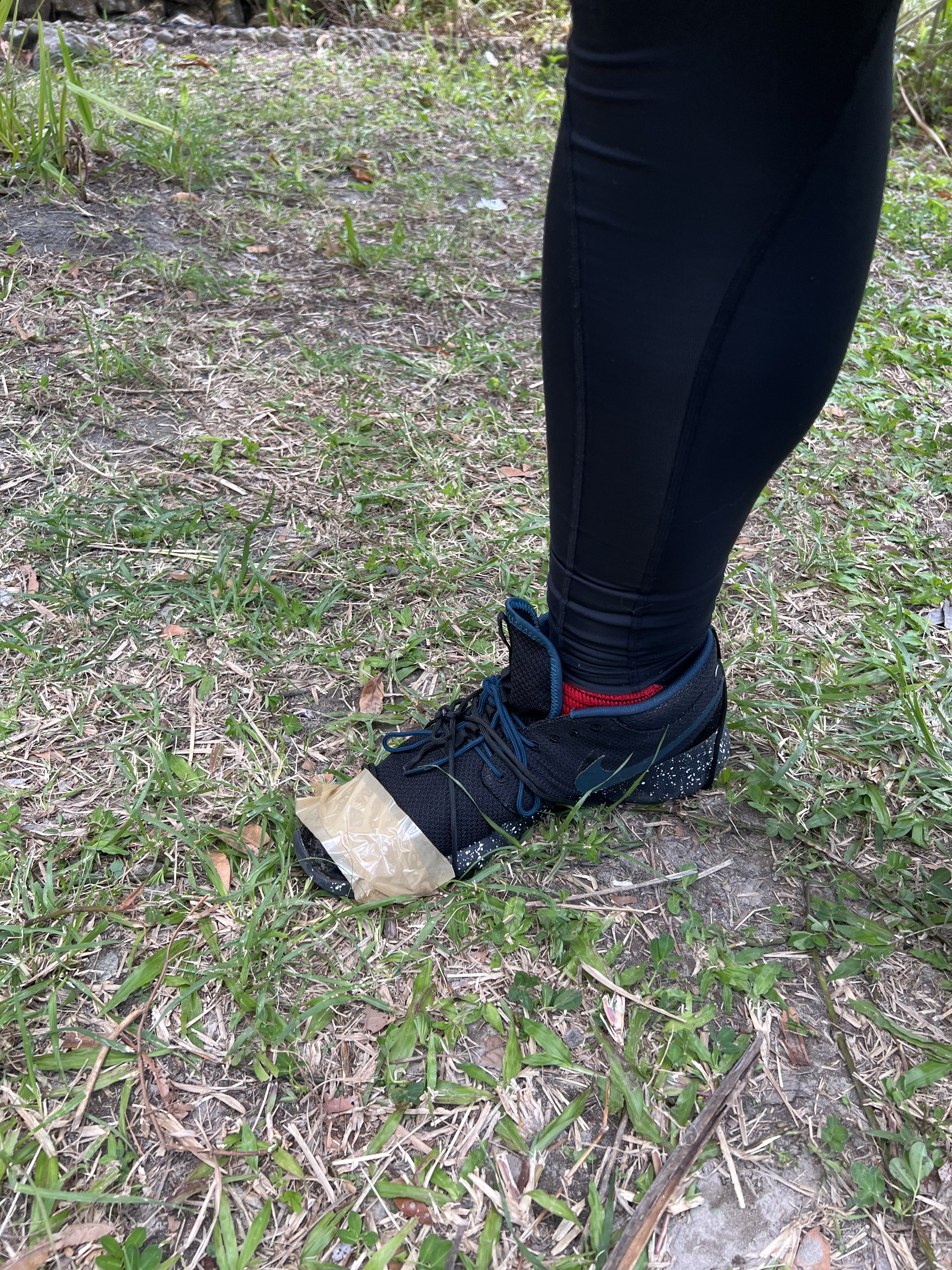
You can also bring extra hiking shoes. The hiking trail to Mt. Pinatubo is full of rocks and muddy soil, so you might end up like one of my friends, who broke his hiking shoes halfway up the trip. Fortunately, the tour guide came prepared and fixed my friend’s shoes with a strong tape. Unfortunately, the guide said that this happens frequently so they learned to bring tape.
Frequently Asked Questions
How long does it take to hike Mt. Pinatubo?
The guides said that the hike typically takes 2 hours going up, and 1.5 hours going down. Based on my experience, it took 3.5 hours to get up and roughly the same time to go down. However, this is because I had to rest so many times during the hike. I also took dozens of photos with my friends.
Is Mt. Pinatubo for beginners?
I would say yes. My friends and I don’t hike regularly. We didn’t train before hiking Mt. Pinatubo, but we reached the summit anyway. I also saw some tourists with kids.
Is Mt. Pinatubo worth it?
Yes! There are hundreds of hiking spots in the Philippines, but none with a view of Mt. Pinatubo Lake. Being surrounded by that kind of view is like being in another country entirely. It’s not as strenuous as other hikes, making it suitable even for beginners.
What is the best time of the year to hike Mt. Pinatubo?
The best time of the year to hike Mt. Pinatubo is from December to May. There’s not a lot of rainfall during these months, which increases the likelihood of you experiencing Mt. Pinatubo with clear weather. Avoid hiking Mt. Pinatubo from June to September. Typhoon season makes hiking to Mt. Pinatubo unsafe, plus you won’t be able to appreciate the view with cloudy skies.
Is it safe to hike Mt. Pinatubo?
It should be safe to hike Mt. Pinatubo during clear weather and with a certified local guide. All tours are canceled in case of heavy rainfall or risks of volcanic eruption.
How much is a trip to Mt. Pinatubo?
As of 2024, the joiner tour for Mt. Pinatubo is PHP 2,500. This fee includes a roundtrip van transfer from Manila to Capas, Tarlac (jump-off point), and back to Manila. We have our own vehicle, so we only paid PHP 7,000 for 4 people.
Can I buy food in Mt. Pinatubo?
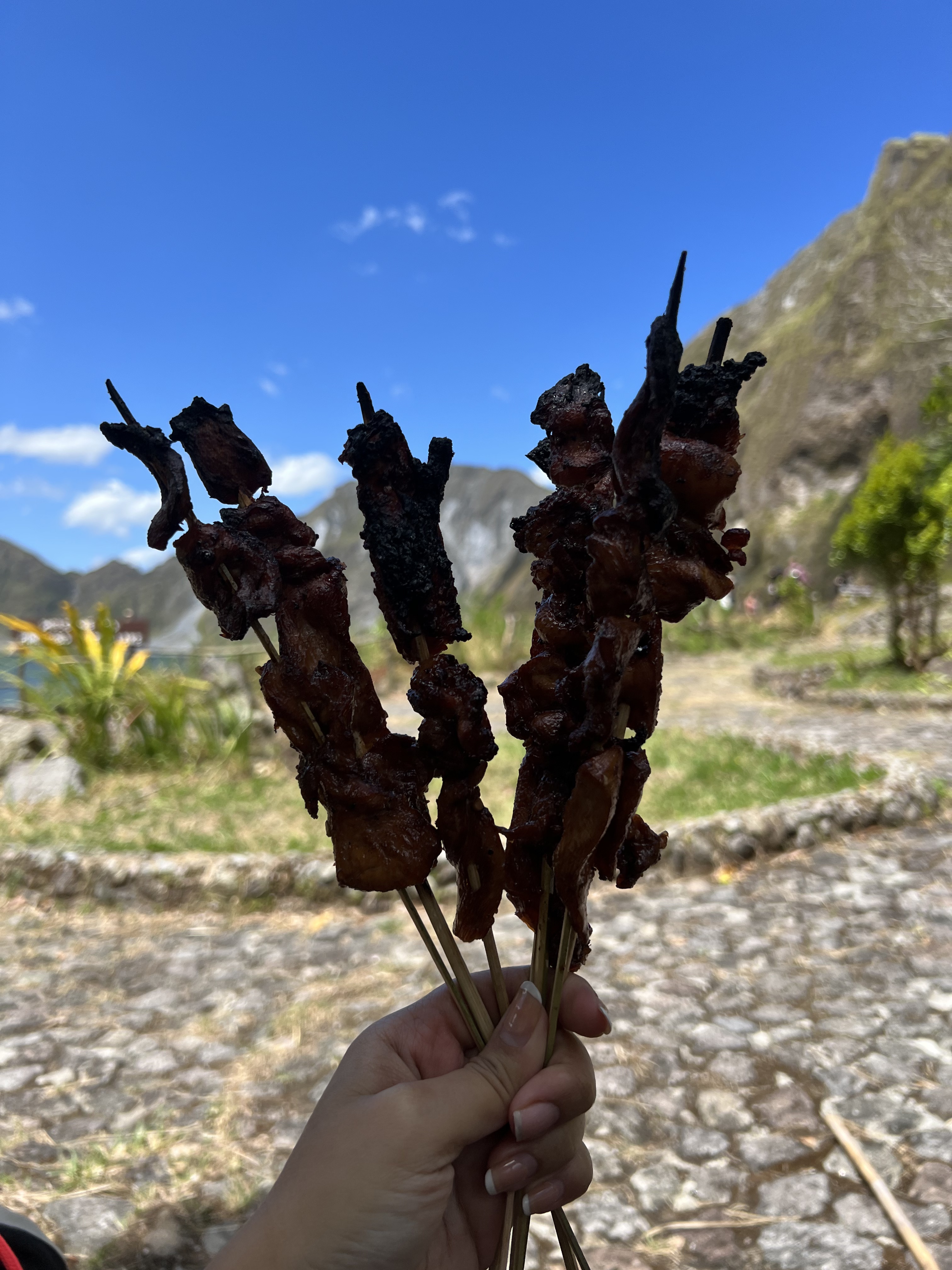
You will reach a small hut 20 to 30 minutes away from the summit. Locals sell snacks and drinks there, including bottled water, soft drinks, and junk food. They sell a bit pricier than the suggested retail price, but if you think about how heavy the food and drinks are and how they have to carry those products up the hut and back down at the end of the day, it’s a small price to pay. There’s no diner or food store at the summit, but you can buy pork/chicken barbecue and soft drinks from a local selling there.


Leave a comment